.jpg)
Las Meninas
Unlike the highly ornate architecture of the time, Baroque painting often subverted expectations. Velázquez's masterpiece creates a complex, almost cinematic reality. It plays with light and shadow (chiaroscuro) and forces the viewer to question who is looking at whom. It is a painting of immense depth, where the true subject is the act of observation itself.
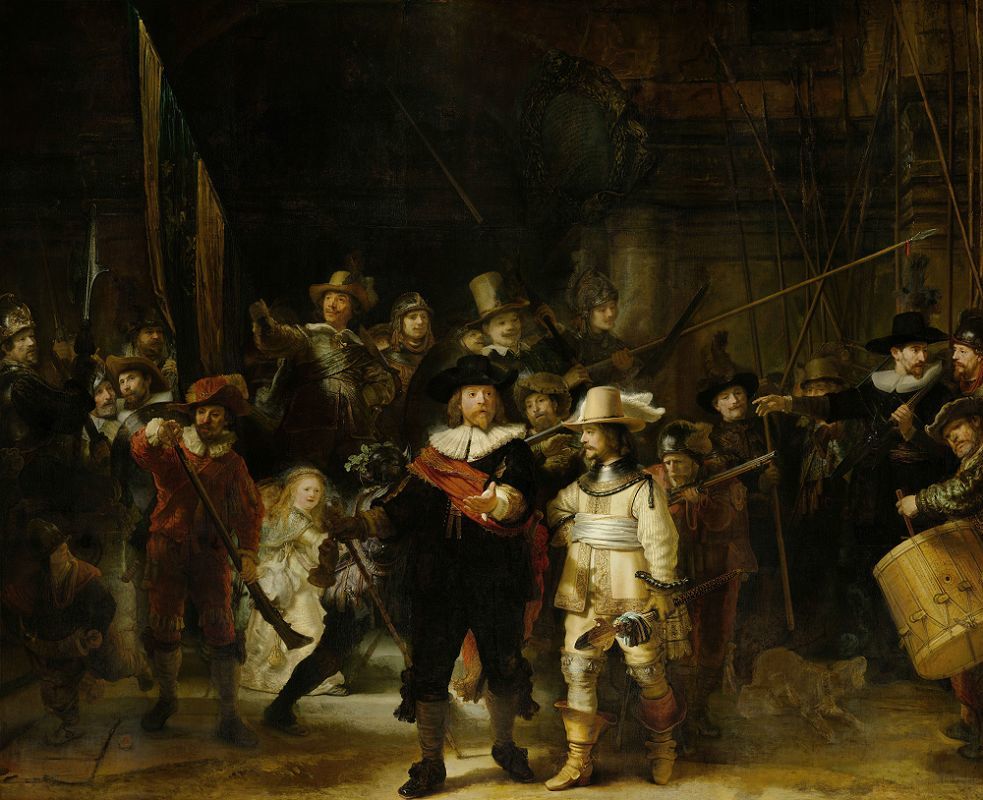
The Night Watch
Rembrandt's iconic work is a masterclass in dramatic lighting. The scene emerges from a deep, almost swallowing darkness. The light doesn't just illuminate; it tells a story, highlighting the action and creating a sense of explosive movement. Here, the "Baroque" is not about gold ornaments, but about the intense, theatrical manipulation of light and human emotion.
.png)
Architecture of Power
In contrast to the dark, intimate canvases of Rembrandt, Baroque architecture was designed to be seen in bright daylight. It is characterized by massive domes, sweeping curves, twisted columns, and an abundance of gold. It is a physical manifestation of power and wealth, meant to make the individual feel small in the presence of greatness.
.jpg)
.jpg)